music songwriting
Music Therapy Without Playing an Instrument: Can You Really Take Part?
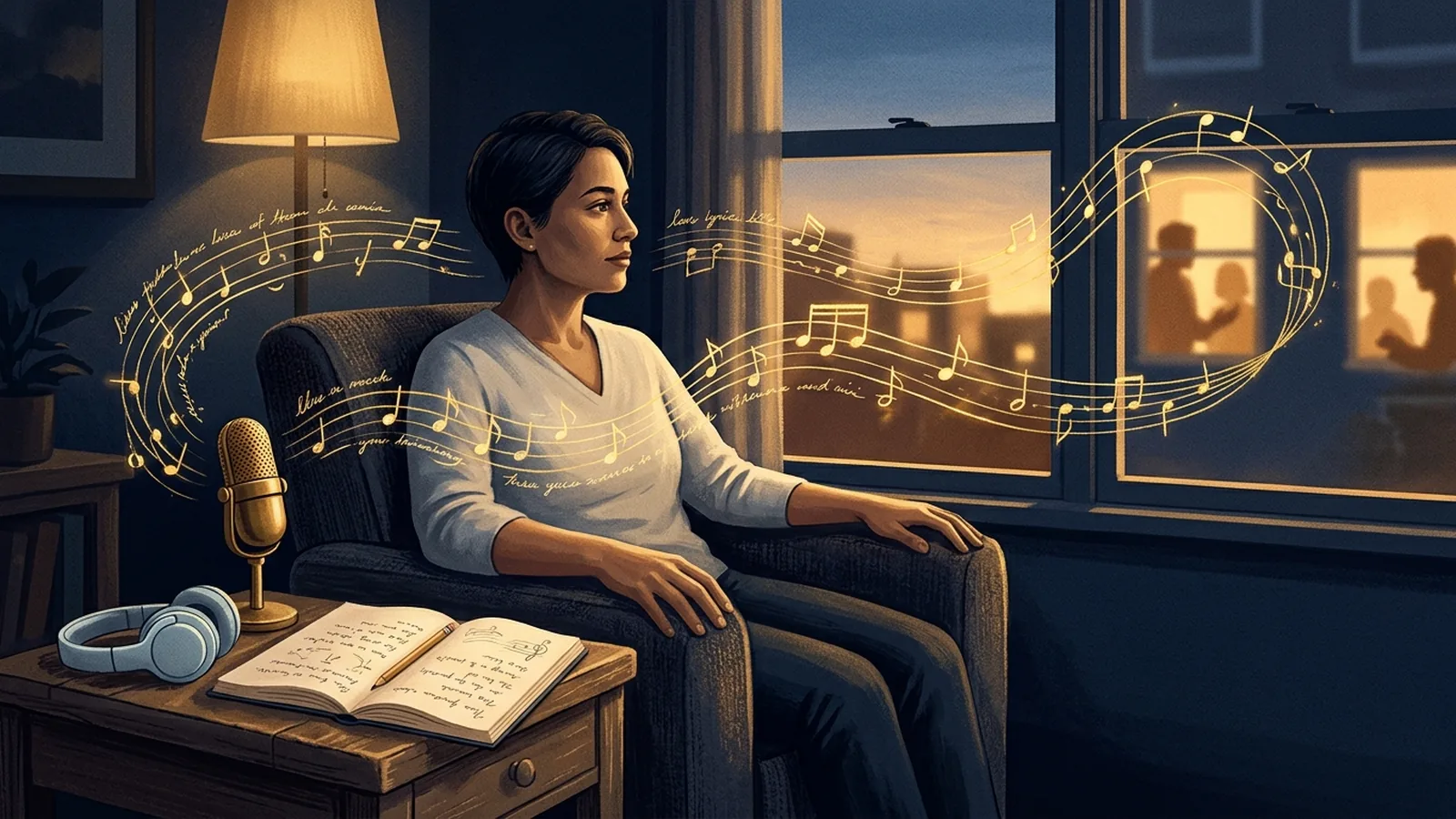
You do not need to master an instrument to take part in every form of music therapy. Listening, singing, playing or writing can all be ways of participating, without turning a single study into a universal promise.
Do you need to know chords, read sheet music or master an instrument before considering music therapy? The most careful answer is no: prior musical ability is not necessarily required. That said, the activities, the expectations and the freedom given to participants can vary from one setting to another.
This article offers general information. It does not promise any therapeutic outcome or decide whether an approach suits a particular personal situation.
What the source we looked at supports
A summary published by EBSCO Research describes a 2014 study published in Music Therapy Perspectives. According to this secondary source, the study looked at a group music therapy intervention and the psychological wellbeing of a group of men.
The summary states that some participants had no previous interest in music and no prior musical ability. This observation only tells us that, in the intervention reported, not every participant had previous musical experience.
The original research paper and its methodological details were not examined here. The summary therefore cannot be used to extend this finding to every form of music therapy, every organisation or every person.
Not being able to play does not necessarily rule out taking part
The source invites a distinction between two things: taking part in an intervention that uses music, and already having instrumental technique. It does not, however, allow us to describe a typical session or to claim that no skill will ever be asked of anyone.
What happens in a session can depend on the practitioner, the organisation and the format offered. The most reliable way to find out what is expected is to ask directly how sessions are run and whether any musical experience is needed.
Practical questions to ask before a session
- Is any musical or instrumental experience expected?
- Which activities take place during the session?
- Is it possible to sit out some of the musical activities?
- Is the format individual or group-based?
- How are activities introduced to new participants?
- Who can I talk to about my preferences or reservations before starting?
These questions are only there to help you understand the setting. They say nothing about whether it suits a personal situation or whether it would have any therapeutic effect.
What this answer cannot promise
The fact that prior musical ability is not always required does not mean that a person will necessarily feel comfortable, that every session will work in the same way or that any particular result will follow. For any question about an individual situation, it is best to ask the practitioner or organisation concerned.
Why this question matters to SWSD
At SWSD Music Production, the music explores mental health, recovery, relationships, resilience, identity and human connection. Tracks such as State Of Mind, Abstraction and You’re Knot Listening belong to that space for expression, without presenting music as a replacement for professional support.
The question of whether you need to be “musical enough” therefore sits naturally within what we do. As the Our Story page explains, SWSD is an independent, family project founded by Shaun Williams, with S.D. and Richie Atkinson. Its alternative rock, blues and ambient influences meet cinematic production to explore deeply human themes.
The conclusion is deliberately measured: not being able to play an instrument does not necessarily rule out taking part, but the details should be checked with each practitioner or organisation.
This reflection also connects with our Mental Health Pledge: 50% of net donations received through this website, after payment-processing fees and a statutory tax provision are deducted, goes to Mind in the UK and UNAFAM in France. The details of this commitment are on the Pledge Transparency page. To find out the different ways to support the project, visit Support SWSD.
Sources
- ebsco.com Music therapy | Complementary and Alternative Medicine | Research Starters | EBSCO Research https://www.ebsco.com/research-starters/complementary-and-alternative-medicine/music-therapy · accessed 2026-08-17