mental health recovery
When Feelings Are Hard to Put Into Words: Music, Expression and Connection
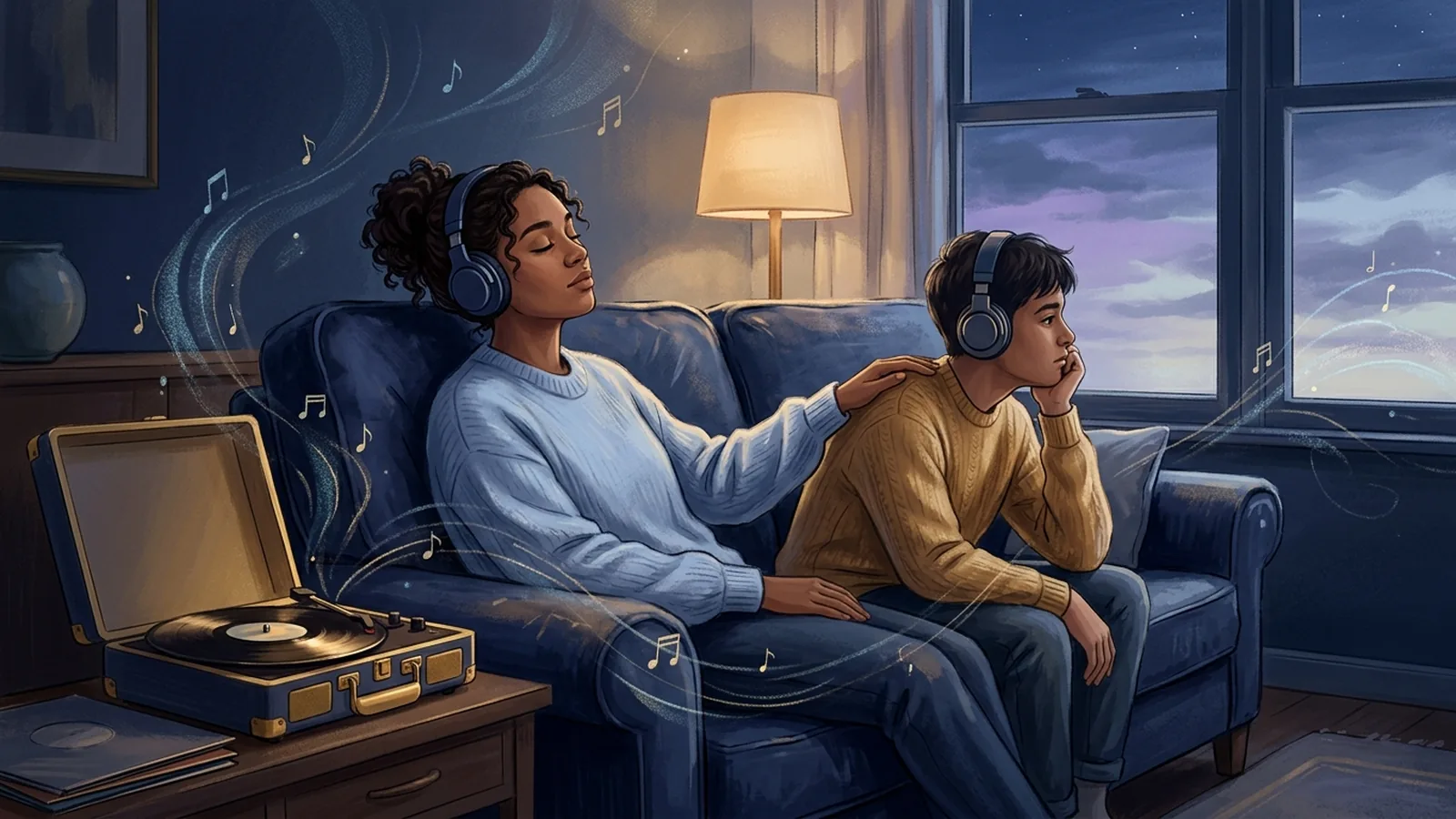
Music cannot always explain what we feel, but it may offer another way to approach it. We explore music and emotional expression, shared listening and the connection that can emerge when ordinary conversation feels inadequate.
There are times when ordinary conversation feels too narrow for what is happening inside us. A feeling may be present without a clear name, or several emotions may seem to arrive at once. At such moments, music and emotional expression can meet in a space where complete explanations are not required.
This does not mean that a song can diagnose, resolve or treat emotional distress. Music is not a guaranteed route to feeling better. Research into everyday auditory sensitivity has found individual variability in responses to sound, although that does not tell us exactly how any person will experience a particular song. Music’s value may instead lie in offering another form through which something difficult can be noticed, shaped or shared.
When words feel incomplete
Language asks us to choose: sad or angry, hopeful or frightened, close or distant. Music can leave more room for contradiction. A melody may feel tender and unsettled at the same time. A rough guitar sound, a restrained rhythm or a long stretch of ambience may seem closer to an internal experience than a carefully constructed sentence.
That closeness does not require a listener to identify one correct meaning. Someone might recognise themselves in the atmosphere of a track without knowing why. Another person may hear it differently. Music can allow both responses to exist without forcing either person to defend an interpretation.
Didi Hirsch’s overview of music and mental health describes music as a potentially supportive tool for emotional expression, connection and everyday well-being, while emphasising that it is not a replacement for professional treatment. That distinction matters: personal listening or music-making can be meaningful without being presented as clinical care.
Expression does not have to be polished
Musical expression is not limited to trained performers or finished songs. It might involve humming, tapping a rhythm, writing an unfinished lyric or choosing a track that seems to carry the emotional weight of a particular moment. The result does not have to be beautiful, public or even fully understood.
A few gentle approaches might include:
- choosing an instrumental piece when lyrics feel too specific;
- making a short playlist around a mood without trying to change that mood;
- writing down a few words, images or colours that arise while listening;
- sending someone a song with a simple message such as, “This feels close to where I am today”;
- making sound privately, without treating it as a performance or judging the result.
These are invitations rather than prescriptions. If listening begins to feel overwhelming, it is reasonable to pause, change the music or step away. There is no obligation to push through an intense reaction simply because a piece of music is considered meaningful.
Connection without perfect understanding
Sharing a song may offer a starting point when an immediate explanation feels difficult: not “This tells you exactly how I feel,” but “There is something here I would like you to hear.” The other person can listen without assuming that every lyric is autobiographical or that they now understand the whole experience.
That kind of exchange benefits from curiosity. Instead of asking, “Is this what happened to you?”, it may be gentler to ask, “What part of this connects with you?” The aim is not to decode someone through their music. It is to give them control over how much they want to express and what they prefer to leave unspoken.
Everyday music and music therapy are not the same
It is important to separate personal engagement with music from music therapy. A ReachLink overview of music-therapy evidence describes music therapy as work delivered by trained professionals within a therapeutic relationship. It also notes that the strength of the evidence varies across mental-health conditions. This source is used here only for that distinction and evidence boundary, not to claim that music therapy is broadly effective for every condition.
Listening to a favourite track, making a playlist or writing a song may have personal value, but those activities should not automatically be described as therapy. Nor should any particular song be expected to produce a predictable clinical outcome. Music can be part of somebody’s wider emotional life without being asked to carry responsibilities it cannot safely promise to fulfil.
Why this conversation belongs at SWSD
As shared in Our Story, SWSD Music Production is a family-driven independent project founded by Shaun Williams, working with S.D. and Richie Atkinson. It brings alternative rock, blues and ambient influences into cinematic production while exploring mental health, recovery, relationships, resilience, identity and human connection.
Across tracks such as State Of Mind, Through The Mist and You're Knot Listening, music provides a place where tension, atmosphere and reflection can meet without demanding a tidy conclusion.
That approach is connected to a wider commitment. Through the Mental Health Pledge, 50% of net donations received through this website, after payment-processing fees and a statutory tax provision are deducted, goes to Mind in the UK and UNAFAM in France. Details are available on the Pledge Transparency page, with donation options on Support SWSD.
Leaving room for what cannot yet be said
Music does not need to translate every feeling into a clear statement. Sometimes its role is more modest: to accompany uncertainty, offer a form for expression or create a point of contact between people. When words are available, music may sit beside them. When they are not, it may help keep the possibility of connection open.
Sources
- reachlink.com Music Therapy Evidence: Which Conditions Respond Best https://www.reachlink.com/advice/psychotherapy/music-therapy-evidence (2026-05-07) · accessed 2026-08-13
- didihirsch.org The Therapeutic Benefits of Music for Mental Health - Didi Hirsch https://didihirsch.org/blog/the-therapeutic-benefits-of-music-for-mental-health · accessed 2026-08-13
- pmc.ncbi.nlm.nih.gov Individual Differences in Sensitivity to Everyday Sounds: Developmental, Environmental, and Personality Predictors of Auditory Processing https://pmc.ncbi.nlm.nih.gov/articles/PMC12357272 · accessed 2026-08-13