people causes
Why SWSD Links Music-Making with a Commitment to Mental Health
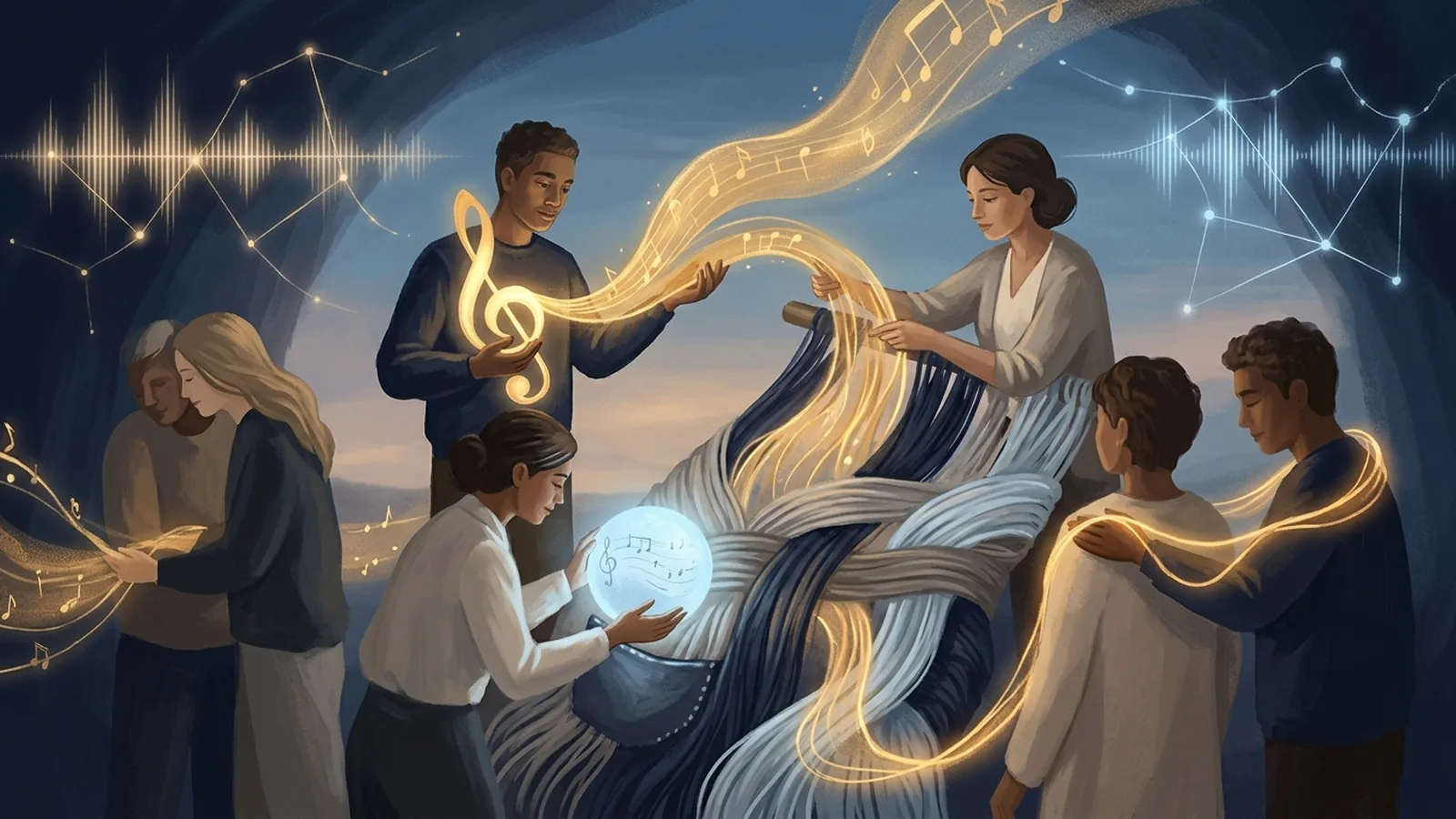
At SWSD, music and a commitment to mental health follow the same thread: expressing human realities, raising awareness without medicalising, and turning part of net donations into practical support.
A commitment that grows out of the music
For SWSD Music Production, linking music with a commitment to mental health is not about adding a cause to an artistic project. It extends the themes that already run through its work: mental health, recovery, relationships, resilience, identity and human connection.
Founded by Shaun Williams, who was born in Wallasey, Merseyside, and now lives in France, SWSD also brings together S.D. and Richie Atkinson. The project blends alternative rock, blues, ambient and cinematic production. Those influences create a space where tension, silence and human connection can be explored without claiming to offer a single answer to what anyone is going through.
Setting emotions in motion
Tracks such as State Of Mind, Through The Mist and You’re Knot Listening belong to a catalogue that looks towards inner states and the difficulty of communicating. The songs are first and foremost pieces of music: they can suggest, question or accompany reflection, but their final meaning also belongs to the person listening.
That freedom matters. A song can sometimes help someone find words, feel less alone or start a conversation. It does not, however, replace a professional assessment or clinical care. SWSD wants to keep that boundary in place so that it can talk about mental health sincerely, without turning art into a therapeutic promise.
Creation, awareness and care: three distinct roles
Making music gives shape to an emotion or a human experience. Awareness helps make certain subjects more visible and encourages respectful listening. Clinical care is the work of qualified professionals in an appropriate setting. These three areas can meet, but they are not interchangeable.
The same distinction applies to music therapy. A post from the Cambridge Institute for Music Therapy Research presents music therapy as a structured space that uses listening, singing, playing and writing, among other things, within therapeutic sessions. A post about this work mentions its potential for expression and connection, particularly when words are hard to find.
A summary from EBSCO Research also outlines several studies on the psychological effects of music therapy. These findings concern structured interventions and specific research settings. They do not support the claim that listening to an SWSD track is a treatment or will produce any particular result.
Turning an intention into a concrete commitment
The project’s consistency therefore does not rest on a medical claim. It rests on a concrete responsibility, without turning a song into a consultation.
SWSD pledges to give 50% of net donations received through this website, after payment-processing fees and a statutory tax provision are deducted. The recipients are Mind in the UK and UNAFAM in France.
The word “net” is important. The pledge is not 50% of the gross amount donors give, but 50% of what remains after the two deductions above. Wording it this way describes the commitment as it is actually calculated, without artificially widening its scope. The full framework is set out on the Mental Health Pledge page.
Transparency is part of the pledge
A financial commitment linked to a sensitive cause should be easy to understand. The Pledge Transparency page is there to make the workings of the pledge accessible: what goes into the calculation, what is deducted and what share of net donations is involved.
That transparency protects the people who support SWSD, the recipient organisations and the project itself. It stops a generous but vague message from taking precedence over the facts. For SWSD, trust is built as much through clear wording as through the intention behind it.
A commitment between the UK and France
The choice of Mind in the UK and UNAFAM in France reflects SWSD’s Anglo-French roots: Shaun Williams was born in Wallasey, Merseyside, and now lives in France. The commitment therefore links the two places that make up the founder’s story, while staying focused on mental health and human connection.
Anyone who would like to know more about how the project began can read Our Story. Those who would like to contribute can visit Support SWSD, bearing in mind exactly how the pledge of 50% of net donations is calculated.
Making room to listen, without promising the impossible
SWSD does not present music as a universal solution. Instead, the project chooses to create work around human realities, to help keep mental health part of the conversation and to tie donations received through its website to a clearly defined financial commitment.
That is where music and a commitment to mental health fit together: not by blurring art and care, but through a continuity between expression, awareness, transparency and action. A song can open a space. The commitment is then to treat that space with honesty and respect.
Sources
- facebook.com #MentalHea... - Cambridge Institute for Music Therapy Research https://www.facebook.com/musictherapyresearch/posts/mentalhealthawarenessweek-serves-as-a-reminder-that-mental-health-matters-and-th/1647479323735064 · accessed 2026-08-17
- ebsco.com Music therapy | Complementary and Alternative Medicine | Research Starters | EBSCO Research https://www.ebsco.com/research-starters/complementary-and-alternative-medicine/music-therapy · accessed 2026-08-17